Culture in Morocco as a foundation for collaboration and understanding
Anyone working with Morocco quickly notices that culture is not something “added on”, but something that runs through everything: communication, trust,
decision-making and expectations. This category brings together blogs that describe Morocco as it appears in daily life and in professional practice—
without promotion, without sales, but with context that helps you understand better and collaborate more effectively.
History as the backdrop to the present
Morocco has been shaped by a long history of dynasties, trade routes, regional identities and outside influences. You see this reflected
in cities, in language, in customs and in how people position themselves. In this category you’ll read how historical lines continue
into the present: why some regions have a strong identity of their own, how urban culture differs from the interior, and why tradition and
modernization often exist side by side rather than replacing one another.
Architecture as a mirror of culture
Architecture in Morocco tells stories: about religion and craftsmanship, about climate and lifestyle, about status and community. From medinas with narrow alleys
and riads with inner courtyards to modern boulevards and new development projects—the built environment shows how people live, meet and use space.
In the blogs in this category you’ll find context about styles, materials, patterns, restoration and the meaning of public places such as squares, souks,
mosques and city walls—not as a travel guide, but as a cultural layer that helps you understand how a society is organized.
Art and craft between heritage and economy
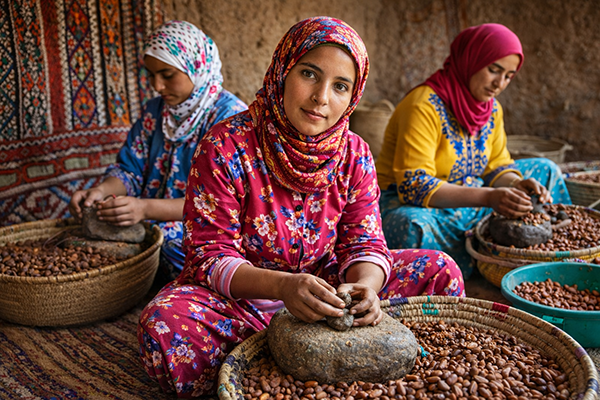
Art in Morocco lives on multiple levels: in museums and galleries, but also in everyday craftsmanship. Ceramics, leather, textiles, woodwork,
metalworking and decorative techniques are not only “beautiful”, they also carry knowledge, regional signatures and family histories.
This category describes how craftsmanship is passed on, how quality is recognized, and how traditional forms move along with contemporary taste.
In a B2B context, this helps you better understand why origin, reputation and craftsmanship can carry so much weight in collaboration.
Music as identity and a social language
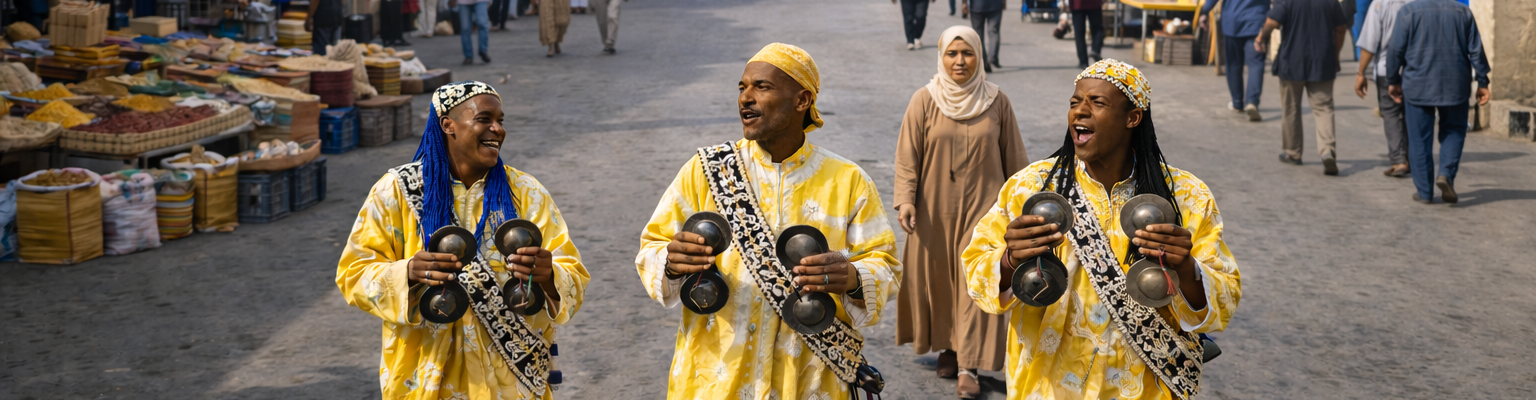
Music in Morocco is more than entertainment: it is identity, emotion and community. From regional styles and rhythms to modern fusions—music
follows migration, generational differences and urban trends. In this category you’ll read about the cultural role of music: when it is played,
what it means in social settings and how different genres are connected to region, history and mentality. That may seem far from B2B,
but it often helps you sense social codes and group dynamics more clearly.
Mentality and communication in practice
Culture becomes most visible in communication. Not only in words, but in tone, timing and implicit signals. In Morocco, building relationships can be
an important foundation before something becomes “final”. Politeness, respect and preserving harmony often influence how things are phrased.
In these blogs we explain how to stay clear without becoming harsh: how to make expectations explicit, how to verify confirmations, and how to
ask professionally what an agreement concretely means—so collaboration becomes calmer and more predictable.
Family life and social structures
Family life is a strong pillar in many Moroccan contexts. Family ties, responsibilities and social networks can influence pace,
availability and decision-making. That does not mean “family decides everything”, but it does mean that relationships and reputation often play a larger role than in
strictly individualistic environments. In this category you’ll find explanations of social structures, hospitality, roles and expectations—and how, as an
international partner, you can engage respectfully without making assumptions.
What you can expect in this category
-
Context for collaboration: blogs about etiquette, communication, expectations and preventing misunderstandings in international cooperation.
-
Cultural themes: music, architecture, art and history as keys to better place regions, identities and customs.
-
Practical examples: recognizable B2B situations (planning, confirmations, decision-making, negotiating) with concrete ways to create clarity.
-
People and society: mentality, family life, social codes and how they influence both daily life and professional contact.
Why this is relevant for B2B
In B2B it is rarely only about price and specifications. Successful cooperation requires understanding context: how trust is built,
how people show “certainty”, how a ‘yes’ comes about and what role relationships and reputation play. By understanding culture, you make better agreements,
ask better questions and prevent small differences in interpretation from having major consequences.
In closing
This category is intended as a calm base layer: a place to understand Morocco better, both humanly and professionally.
No promotion and no sales talk—but clear, descriptive blogs that help you look with more nuance, communicate with more respect
and collaborate with more certainty.